This content was aggregated from local dealer data and insights provided by the USA Today Network Automotive Insights team using Google Gemini and the Vehicles for Sale Near Milwaukee marketplace writing team.
Milwaukee winters can turn an ordinary commute into a test of traction, visibility, and driving confidence, making all-wheel drive an important consideration for compact SUV shoppers. The 2027 Kia Seltos is a vehicle worth evaluating for drivers who want the flexibility of a small crossover without stepping into a larger, more expensive SUV. But does Milwaukee's combination of snow, freezing rain, and icy neighborhood streets make AWD worth the additional investment? Understanding the differences between AWD and front-wheel drive (FWD), along with the Seltos' performance, technology, and ownership costs, can help local buyers determine which configuration offers the strongest value.
The Kia Seltos occupies an appealing position in the subcompact SUV market, offering a combination of manageable exterior dimensions, practical passenger space, elevated seating, and available all-wheel-drive capability.
For Milwaukee commuters, those qualities address several everyday priorities. A compact crossover needs to be comfortable on highways, easy to maneuver through parking areas, capable of carrying groceries or weekend luggage, and reasonably economical to operate throughout the year.
The central value question is whether adding AWD provides enough practical benefit to justify its additional cost.
A front-wheel-drive Seltos sends engine power to the front wheels, creating a relatively straightforward drivetrain arrangement. FWD vehicles generally weigh less and use less fuel than comparable AWD configurations, making them attractive to shoppers focused on affordability.
An AWD Seltos can distribute power between the front and rear axles when additional traction is needed. This can improve the vehicle's ability to accelerate on slippery pavement, climb snow-covered inclines, and move away from a stop when road conditions are challenging.
For drivers who regularly travel before snowplows have cleared residential streets, AWD can be a meaningful convenience.
However, Milwaukee shoppers should recognize an important distinction: AWD improves traction when accelerating, but it does not automatically shorten braking distances or prevent skidding on ice.
Tire quality, road conditions, driving speed, and vehicle maintenance remain essential to winter safety.
The Seltos' appeal extends beyond drivetrain choice.
Its compact proportions make it more maneuverable than many midsize SUVs, while its crossover body provides useful cargo flexibility and a higher seating position than a conventional sedan.
For drivers who regularly commute between Milwaukee, Wauwatosa, West Allis, Brookfield, and surrounding communities, this balance of size and practicality can be especially attractive.
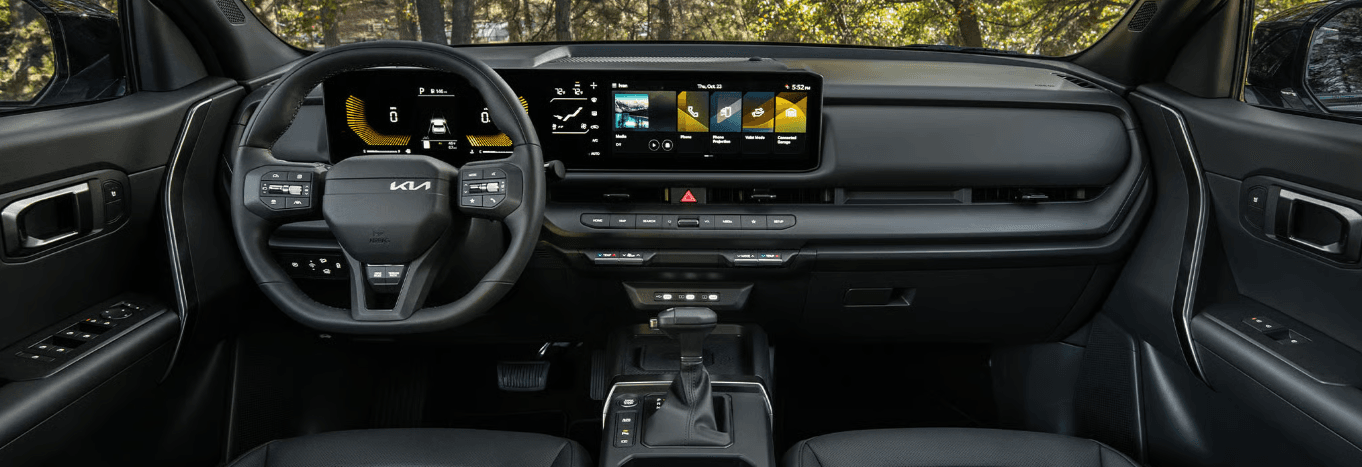
The Seltos also offers a modern technology-oriented interior, with infotainment, connectivity, and driver-assistance equipment that varies by trim.
The result is a vehicle designed to handle everyday transportation while offering additional flexibility for winter travel and weekend activities.
Model-year note: Final U.S.-market specifications, trim availability, and pricing for the 2027 Kia Seltos were not independently confirmed at the time of writing. The equipment and numerical specifications discussed below use the recent U.S.-market Seltos as a reference and should be verified against official 2027 Kia documentation before publication.
The recent U.S.-market Kia Seltos lineup has offered two gasoline engine choices: a naturally aspirated 2.0-liter four-cylinder and a more powerful turbocharged 1.6-liter four-cylinder.
These engines serve different driving priorities.
The 2.0-liter engine emphasizes straightforward everyday transportation and efficiency. In recent configurations, it produces approximately 146 horsepower and 132 lb-ft of torque.
The turbocharged 1.6-liter engine offers stronger acceleration, producing approximately 190 horsepower and 195 lb-ft of torque in the recent U.S. model.
For Milwaukee drivers, the difference becomes noticeable during highway merging, passing, and acceleration with passengers or cargo aboard.
However, additional horsepower should not be confused with additional winter traction.
A vehicle with less power but appropriate winter tires may perform more predictably on slippery pavement than a more powerful model equipped with unsuitable tires.
The following figures describe the recent U.S.-market Seltos configuration and are not confirmed 2027 specifications.
Specification | Recent Kia Seltos Reference |
Vehicle class | Subcompact SUV |
Base engine | 2.0L four-cylinder |
Base engine output | Approximately 146 hp |
Available turbo engine | 1.6L turbocharged four-cylinder |
Turbo engine output | Approximately 190 hp |
Drivetrain | FWD or available AWD, depending on trim |
Seating capacity | Five passengers |
Cargo capacity behind rear seats | Approximately 26.6 cu. ft. |
Maximum cargo capacity | Approximately 62.8 cu. ft. |
Ground clearance | Approximately 7.3 inches |
The final 2027 vehicle may differ in its engines, transmissions, dimensions, and available equipment.
The most important benefit of AWD is its ability to improve acceleration traction when road conditions become slippery.
On a snow-covered street, a front-wheel-drive vehicle relies on its front tires to deliver engine power. If those tires lose grip, the vehicle's traction-control system may reduce power to help manage wheelspin.
An AWD system can distribute power to additional wheels, potentially helping the vehicle move forward more effectively.
This advantage is especially relevant when accelerating from snowy intersections, leaving unplowed parking areas, or navigating slippery inclines.
The recent Seltos AWD system also offers a selectable locking function designed to manage torque distribution at lower speeds under appropriate conditions. Buyers should confirm whether the final 2027 AWD system retains this feature and review its operating limitations.
AWD does not make the vehicle immune to ice. All vehicles depend on tire traction to stop and turn.
For Wisconsin winters, properly selected winter tires can be just as important as drivetrain configuration, particularly during braking and cornering.
Fuel efficiency is one of the main financial considerations when choosing between FWD and AWD.
Comparable FWD vehicles generally achieve better fuel economy because they have fewer drivetrain components and often weigh less.
AWD adds mechanical hardware that can increase weight and drivetrain losses, potentially reducing efficiency.
For a Milwaukee driver commuting approximately 12,000 miles annually, even a modest difference in fuel economy can affect operating costs over several years.
Consider an illustrative comparison:
FWD vehicle averaging 30 mpg: approximately 400 gallons annually.
AWD vehicle averaging 28 mpg: approximately 429 gallons annually.
Difference: approximately 29 additional gallons per year.
At a hypothetical gasoline price of $3.25 per gallon, that represents roughly $94 in additional annual fuel costs.
These are examples rather than official 2027 Seltos EPA ratings. Actual consumption will depend on the final powertrain, tires, driving conditions, and individual driving habits.
The more important question is whether the traction advantage of AWD justifies its purchase and operating costs for a particular driver.
Technology is another important component of the Seltos' value proposition.
Recent Seltos models have offered touchscreen infotainment systems, smartphone connectivity, digital instrumentation, and available navigation-related features.
Depending on trim, the recent lineup has included equipment such as a 10.25-inch infotainment touchscreen, digital displays, and upgraded audio systems.
For Milwaukee commuters, smartphone integration can be useful when navigating traffic delays, monitoring changing routes, and accessing entertainment during longer trips.
Available heated front seats and other comfort equipment can also make a meaningful difference during Wisconsin winters.
However, technology and comfort features should be evaluated by configuration rather than assumed to be standard across the lineup.
A buyer prioritizing winter usability may find heated seats and a heated steering wheel more valuable than appearance upgrades or premium audio.
The Seltos' recent driver-assistance technology has included features designed to support routine commuting and highway travel.
Depending on configuration, shoppers may encounter systems such as:
Forward Collision-Avoidance Assist
Lane Keeping Assist
Lane Following Assist
Driver Attention Warning
Blind-Spot Collision Warning
Rear Cross-Traffic Collision-Avoidance Assist
Available Smart Cruise Control
These systems can provide useful assistance in traffic, but they are not substitutes for attentive driving.
Winter weather can also affect sensor and camera performance.
Snow accumulation, freezing rain, road salt, and heavy precipitation may reduce visibility or interfere with certain driver-assistance functions.
Drivers should keep applicable sensors and cameras clear and follow the vehicle owner's manual for operating guidance.
Choosing the right Seltos involves more than deciding whether AWD is worthwhile. Buyers should also consider which trim offers the equipment they will actually use.
Recent U.S.-market Seltos configurations have included LX, S, EX, X-Line, and SX trims. Final 2027 trim names, equipment, and drivetrain availability require confirmation.
Recent Trim | Primary Appeal | Drivetrain Considerations | Best Fit |
LX | Essential transportation and value | Check model-year AWD availability | Budget-conscious commuters |
S | Additional convenience and styling | FWD/AWD availability varies | Everyday drivers |
EX | Greater comfort and convenience | AWD availability varies by model year | Comfort-focused commuters |
X-Line | Rugged styling and turbocharged performance | AWD-focused configuration in recent models | Drivers seeking stronger performance |
SX | Higher-level technology and equipment | AWD-equipped in recent configurations | Buyers wanting premium features |
The comparison illustrates how Kia has positioned the Seltos lineup in recent years. It should not be treated as a confirmed 2027 trim chart.
For Milwaukee shoppers who primarily travel on major roads that receive regular snow removal, FWD may offer the strongest financial value.
The advantages generally include a lower initial purchase cost, better fuel-efficiency potential, and fewer drivetrain components.
Modern FWD vehicles also benefit from traction control and electronic stability systems, which help manage wheelspin and vehicle stability under appropriate conditions.
When equipped with quality winter tires, an FWD Seltos can be a capable commuter in many winter situations.
However, FWD drivers may encounter more difficulty accelerating on steep, icy surfaces or moving through deeper snow than drivers of comparable AWD vehicles.
AWD becomes more compelling when winter road conditions are a regular part of daily driving.
For example, a commuter who leaves home before dawn may encounter residential streets that have not yet been plowed.
Another driver may frequently travel through suburban neighborhoods, industrial areas, or secondary roads where snow removal occurs less quickly than on major highways.
In these situations, AWD can improve the ability to move away from a stop and maintain momentum when traction is limited.
The added cost may be reasonable for drivers who regularly experience these conditions.
However, AWD should be viewed as a practical traction feature rather than a guarantee of winter safety.
The value of AWD depends on how often the driver benefits from it.
A useful comparison should include the initial drivetrain price difference, fuel-economy differences, expected maintenance expenses, tire costs, and the owner's typical winter routes.
For someone who drives mostly on cleared urban streets and can avoid traveling during severe storms, FWD may provide the better overall financial return.
For someone who must commute regardless of snowfall and frequently encounters untreated pavement, AWD may justify its premium.
Buyers should also compare the total cost of similarly equipped trims. In some vehicle lineups, selecting AWD may require choosing a different trim or equipment package, which can affect the overall price difference.
Exact 2027 MSRP figures and drivetrain premiums should be confirmed through Kia's official pricing information rather than assumed from previous model years.
Milwaukee commuters frequently rely on major routes such as I-94, I-43, and I-794 to travel between residential neighborhoods, employment centers, and surrounding communities.
During normal weather, either FWD or AWD can provide suitable everyday transportation.
The Seltos' compact dimensions make it relatively easy to maneuver through city traffic, while its elevated seating position offers the outward perspective many crossover buyers prefer.
When highways are clear, AWD generally offers limited additional benefit compared with FWD.
During snowfall, however, AWD may help when accelerating onto slippery entrance ramps or leaving snow-covered parking areas.
Drivers should still reduce speed and increase following distances because AWD does not improve the friction available for braking.
Milwaukee's location near Lake Michigan contributes to a challenging winter driving environment.
Snowfall, freezing temperatures, wind, and rapidly changing road conditions can affect both city streets and suburban routes.
Lake-effect snow can create localized differences in snowfall intensity, meaning one neighborhood may experience more difficult conditions than another.
For commuters who cannot adjust their schedules during winter storms, AWD can provide useful traction when accelerating on snow-covered pavement.
The Seltos' crossover ground clearance may also be helpful when navigating moderate snow accumulation, although it does not make the vehicle suitable for deep snow or off-road travel.
Drivers should avoid assuming that AWD can overcome deep snowbanks, ice-covered roads, or poor visibility.
Milwaukee drivers often encounter tight parking areas, downtown garages, and busy shopping districts.
The Seltos' compact footprint is an advantage in these situations.
Compared with larger SUVs, a small crossover generally requires less parking space and is easier to maneuver through crowded lots.
Its rear liftgate also makes loading groceries, luggage, and other belongings convenient.
The recent Seltos cargo layout offers approximately 26.6 cubic feet behind the rear seats, expanding to approximately 62.8 cubic feet with the rear seats folded.
Those figures provide a useful reference for the model's practicality, although final 2027 cargo specifications should be verified.
For individuals, couples, and small families, the combination of manageable dimensions and flexible cargo capacity is a significant part of the Seltos' everyday appeal.
Wisconsin winters can be demanding on any vehicle, regardless of drivetrain.
Road salt, moisture, freezing temperatures, and potholes can contribute to wear over time.
Regular maintenance is therefore essential.
Drivers should monitor tire pressure because cold temperatures can cause pressure to decrease.
Tire tread depth is especially important during winter, when snow and slush can reduce available traction.
Owners should also maintain windshield-washer fluid, inspect wiper blades, monitor battery condition, and keep exterior lights clean.
Regular washing, including appropriate underbody cleaning, can help remove accumulated road salt.
AWD vehicles may also require additional drivetrain maintenance according to the manufacturer's service schedule.
The strongest long-term ownership strategy is to choose the drivetrain that fits the driver's needs and maintain the vehicle consistently.
AWD is most valuable for drivers who regularly encounter slippery roads and cannot avoid traveling during winter weather.
This includes early-morning commuters, drivers who live on less frequently plowed streets, and motorists who travel through rural or suburban areas where road conditions can vary.
FWD remains a sensible choice for drivers who primarily use well-maintained city roads and prioritize fuel efficiency and lower ownership costs.
Ultimately, the right drivetrain depends less on Milwaukee's average winter conditions and more on the specific roads, schedules, and driving situations each owner encounters.
AWD is not essential for every Milwaukee driver. FWD can work well on regularly cleared streets and highways when equipped with appropriate tires. AWD becomes more valuable for commuters who frequently encounter unplowed neighborhoods, slippery inclines, or early-morning winter conditions. Buyers should evaluate their regular routes before deciding whether the additional drivetrain cost is justified.
AWD can improve traction when accelerating on slippery surfaces, but it does not automatically improve braking distances or cornering grip. On ice, tire quality, vehicle speed, and driver inputs are especially important. Milwaukee drivers should consider winter tires and maintain adequate following distance regardless of whether they choose an AWD or FWD Seltos.
FWD configurations generally offer lower purchase costs and better fuel-efficiency potential than comparable AWD models. They also have fewer drivetrain components that may require maintenance. However, exact savings depend on final 2027 pricing, equipment, and EPA ratings. Milwaukee buyers should compare similarly equipped vehicles and consider their expected annual mileage before calculating long-term savings.
Available AWD, heated front seats, a heated steering wheel, remote-start capability, and effective climate controls can make winter commuting more comfortable and manageable. Appropriate tires are especially important for traction and braking. Feature availability varies by trim and model year, so buyers should verify the equipment included in the specific 2027 Seltos configuration they are considering.
For many commuters, a compact AWD crossover can provide a useful balance of winter traction, maneuverability, and cargo flexibility without the size of a larger SUV. The Seltos may be especially appealing to individuals and small households. However, buyers who regularly need greater passenger capacity, towing capability, or substantial cargo space should compare larger alternatives.
For many Milwaukee drivers, AWD is a worthwhile feature—but it is not automatically the best value for everyone.
The 2027 Kia Seltos AWD deserves consideration from shoppers who regularly encounter snow-covered streets, icy intersections, and winter conditions that make acceleration traction important.
Its compact crossover design also offers practical advantages for commuting, errands, and weekend travel.
However, drivers who primarily use cleared highways and city streets may find that a FWD configuration equipped with appropriate winter tires meets their needs while reducing purchase and operating costs.
The strongest approach is to consider winter driving habits alongside fuel economy, comfort features, maintenance requirements, and overall ownership expenses.
AWD is worth paying for when it solves a problem the driver encounters regularly—not simply because the vehicle will be driven in Wisconsin.
For Milwaukee shoppers, that distinction can make the difference between purchasing useful capability and paying for equipment that rarely provides a meaningful benefit.
Choosing between AWD and FWD starts with understanding how each configuration fits your daily commute, winter driving conditions, and long-term budget.
Browse 2027 Kia Seltos for sale near Milwaukee to explore current listings, compare configurations, and review individual vehicle specifications.
You can also learn more about Van Horn Kia - Sheboygan to review dealership information and explore your vehicle-shopping options.
Written for https://vehiclesforsalenearmilwaukee.com/
By the USA TODAY Network Automotive Insights Team, in collaboration with Van Horn Kia Of Sheboygan and the Vehicles for Sale Near Milwaukee - Journal Sentinel.
Disclaimer: This article's content is intended for informational purposes only. Vehicle specifications and features are based on data provided by J.D. Power and local dealerships and may vary by individual vehicle, VIN, trim, configuration, packages, and optional equipment. Vehicle images may not depict the exact model, trim, features, packages, accessories, or specifications described. Vehicle pricing, availability, features, and specifications are subject to change without notice. Please reference the dealership's vehicle listing and window sticker or consult the dealership directly for complete and accurate details.