This content was aggregated from local dealer data and insights provided by the USA Today Network Automotive Insights team using Google Gemini and the Vehicles for Sale Near Milwaukee marketplace writing team.
For Wisconsin tradespeople, choosing a pickup is often less about buying the biggest truck available and more about finding the right balance of capability and everyday usability. The Ford Ranger occupies that middle ground, combining a practical pickup bed, available four-wheel drive, turbocharged power and substantial towing capability with dimensions that are easier to manage than many full-size trucks. For contractors, technicians and other professionals traveling between Manitowoc, Milwaukee and jobsites across eastern Wisconsin, that combination can make a midsize pickup worth considering.
Full-size pickups remain the appropriate tool for drivers who regularly need maximum payload, larger beds, heavy-duty towing capability or more cabin space. But not every job requires those advantages.
The Ford Ranger provides an alternative for drivers whose typical work involves carrying tools, equipment, building supplies or a trailer without routinely approaching the limits of a full-size truck. Its smaller exterior footprint can be especially useful when a workday includes tight parking lots, residential driveways, downtown streets or confined jobsites.
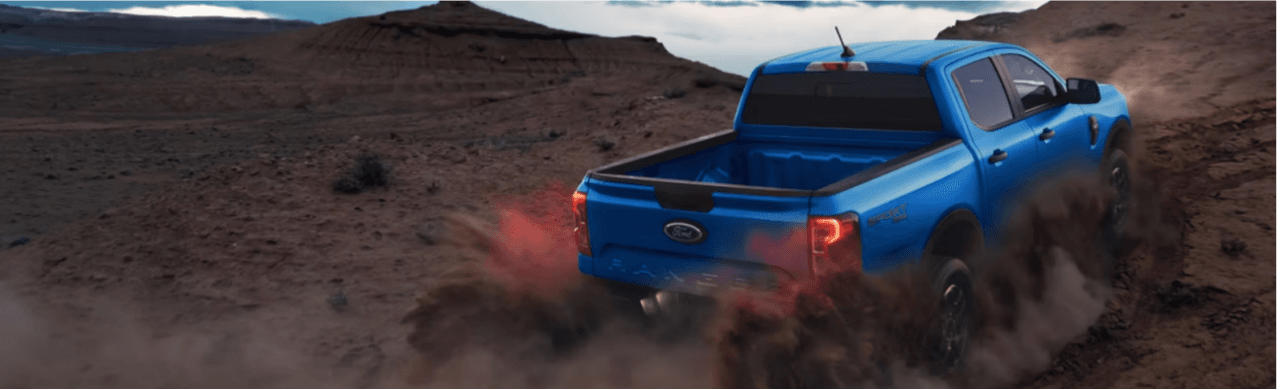
Current-generation Ranger models use a four-door SuperCrew cab and approximately five-foot cargo bed. That layout provides seating for a crew or family while preserving an open cargo area for toolboxes, materials and equipment.
Another advantage is maneuverability. A midsize truck can be easier to position in a garage, negotiate through urban traffic and park at stores or customer locations. Those characteristics matter when a pickup serves as both a work vehicle during the week and personal transportation after hours.
That does not mean the Ranger replaces every full-size truck. A tradesperson routinely hauling very heavy payloads, towing large equipment trailers or needing maximum bed volume may still benefit from moving up to a larger pickup. The Ranger's value proposition is different: provide useful truck capability without requiring every owner to live with full-size dimensions every day.
The Ranger lineup also lets buyers prioritize different kinds of value.
The Ranger XL is the work-oriented starting point, making it a logical configuration for shoppers primarily concerned with truck fundamentals. The Ranger XLT adds convenience and technology features that may appeal to drivers who spend considerable time traveling between jobs. The Ranger Lariat moves farther toward premium comfort and equipment, while the Ranger Raptor is a specialized high-performance off-road model rather than simply a more luxurious work truck.
For many shoppers, the important question is therefore not which trim is universally “best,” but which equipment they will actually use.
The Ford Ranger's work credentials start with its turbocharged EcoBoost engine lineup. Depending on model and configuration, current-generation Rangers offer a 2.3-liter EcoBoost four-cylinder or an available 2.7-liter EcoBoost V6, while the Ranger Raptor uses a more powerful 3.0-liter EcoBoost V6.
For conventional Ranger models, properly configured towing capacity can reach up to 7,500 pounds. Actual capability depends on drivetrain, equipment, trailer configuration and vehicle loading, so buyers should verify the specific truck's rating before choosing a trailer.
That distinction matters for working owners. A trailer carrying landscaping equipment, construction materials or recreational gear may fit comfortably within one configuration's limits but exceed another truck's available payload, tongue-weight or gross combined weight limits.
Payload deserves equal attention. Payload ratings vary by trim, drivetrain and installed equipment, and everything placed in or on the truck—including passengers, tools, cargo and trailer tongue weight—counts toward the available payload capacity. The certification label on the individual vehicle is the appropriate reference for its specific payload limit.
The Ranger's roughly five-foot bed is shorter than the longer beds available on some full-size trucks, but its dimensions can be an advantage when overall vehicle length matters.
For tradespeople, the bed can accommodate toolboxes, compressors, jobsite supplies, landscaping equipment and other gear while keeping dirty or bulky cargo separate from the passenger compartment. Ford also offers bed-related features and accessories depending on configuration, allowing owners to tailor the truck around the equipment they routinely carry.
Buyers should think about cargo in terms of actual dimensions rather than simply “midsize” versus “full-size.” If a crew routinely transports long lumber, large sheet goods or bulky equipment, a full-size truck with a longer bed may be more convenient. If most loads consist of tools, cases, smaller materials and towable equipment, the Ranger's more compact bed may be sufficient while making the truck easier to maneuver.
Available four-wheel drive is another relevant consideration in Wisconsin. It can provide additional traction when accelerating on snow-covered roads, navigating muddy jobsites or traveling over loose surfaces.
Four-wheel drive does not eliminate the limitations imposed by snow and ice, however. Tires, road conditions, vehicle speed and driver inputs remain critical. Wisconsin drivers should consider appropriate seasonal tires and allow additional stopping distance during severe winter weather regardless of drivetrain.
A work truck may spend only part of its life hauling cargo or towing. The rest of the time, it has to function in traffic, parking lots and ordinary commuting.
That is where the Ford Ranger's midsize dimensions become especially relevant. A tradesperson traveling from Manitowoc toward Milwaukee may encounter everything from highway driving to urban streets and crowded parking areas in a single day. Compared with a larger pickup, a Ranger's smaller footprint can reduce some of the inconvenience associated with maneuvering a truck in those environments.
The SuperCrew configuration also broadens its usefulness beyond work. Rear seating makes it possible to carry coworkers during business hours or passengers during personal trips, while the separate bed remains available for dirty equipment and cargo.
Current-generation Ranger models also incorporate modern infotainment and connectivity features, with equipment varying by trim and package. Ford's SYNC 4A system is available with large touchscreen interfaces, smartphone connectivity and other connected features.
For a tradesperson, those features can have practical value. Navigation, hands-free communication and smartphone integration can make it easier to move between appointments or jobsites without turning the truck into a purely utilitarian work vehicle.
Driver-assistance technologies are also available across the lineup, with specific features dependent on trim and equipment. Buyers comparing XL, XLT and Lariat models should look closely at which assistance and convenience systems are standard, optional or included in a particular package rather than assuming every Ranger is equipped identically.
Eastern Wisconsin places varied demands on a pickup. A typical week might involve commuting on I-43, carrying equipment through Manitowoc, visiting customers in smaller communities or navigating Milwaukee-area traffic.
The Ranger's appeal is its ability to address several of those situations with one vehicle.
For electricians, HVAC technicians, maintenance professionals and similar trades, the bed can keep tools and jobsite equipment outside the passenger compartment. Contractors who occasionally tow can configure the truck around an appropriate trailer package rather than automatically moving into a full-size pickup. Landscaping and property-maintenance professionals may appreciate the combination of an open bed, available four-wheel drive and a relatively manageable footprint.
Winter is an equally important part of Wisconsin ownership. Available 4x4 can be useful when roads or jobsites become snow-covered, while the Ranger's enclosed SuperCrew cabin gives owners a vehicle that can still serve comfortably as everyday transportation.
The tradeoff is capacity. Drivers who consistently carry extremely heavy loads, need substantially more cargo-bed space or tow beyond the Ranger's ratings should compare full-size alternatives. Choosing between midsize and full-size trucks is ultimately a matter of matching the truck's ratings and dimensions to the work performed most often.
For shoppers researching a new Ford Ranger, trim selection can have as much impact on value as truck size.
The XL emphasizes the essentials and can make sense for a work-focused buyer who does not need extensive premium equipment. The XLT adds comfort, convenience and technology and may suit drivers who divide their time between jobsites and longer daily travel. The Lariat adds a more upscale equipment mix for owners who want their work truck to double as a more premium personal vehicle.
The Raptor deserves separate consideration. Its upgraded powertrain, suspension and off-road hardware are aimed primarily at high-performance off-road use. Those capabilities are meaningful for the right buyer, but they address a different need than maximizing straightforward work-truck value.
Rather than comparing trims solely by their advertised price, tradespeople should consider the cost of the equipment they actually require: drivetrain, towing hardware, driver-assistance features, cabin amenities and any bed accessories needed for work. MSRP and option availability can change by model year, so current configuration details should be confirmed when shopping.
It can be, depending on the work. The Ranger provides a five-foot-class bed, four-door cab, available 4x4 and substantial towing capability in a midsize package. Tradespeople who primarily carry tools, smaller materials or tow within the Ranger's ratings may find it practical. Heavy payloads, oversized cargo and larger trailers can make a full-size truck more appropriate.
Properly equipped conventional current-generation Ford Ranger models can tow up to 7,500 pounds. Towing capacity varies with configuration and equipment, and the Ranger Raptor has different ratings. Trailer tongue weight also contributes to vehicle payload, so Wisconsin buyers should check the specific truck's certification labels and towing documentation before selecting a trailer.
Available 4x4 can be useful for snow-covered roads, muddy construction areas and other low-traction surfaces common during a Wisconsin year. It should not be treated as a substitute for suitable tires or cautious winter driving, however. Buyers who regularly visit unplowed or unfinished jobsites may place greater value on four-wheel drive than drivers who remain primarily on cleared pavement.
The XL focuses on work-truck fundamentals, while the XLT adds more convenience and technology. Lariat models move toward a more premium cabin and equipment mix. Exact standard and optional features can change by model year and package. Buyers should compare the equipment list for the individual truck rather than relying only on the trim badge.
A Ranger can provide useful bed and towing capability while occupying less space than many full-size pickups. That can make parking, urban streets, residential jobsites and everyday commuting easier to manage. A full-size truck remains advantageous when greater payload, bed volume, passenger room or towing capability is regularly required, so the better fit depends on the owner's workload.
For Wisconsin drivers comparing midsize and full-size pickups, the Ranger offers a useful middle ground: genuine pickup utility, available four-wheel drive, substantial properly equipped towing capability and a footprint suited to both jobsites and everyday driving.
Browse current Ford Ranger for sale near Milwaukee, WI listings to compare trims, drivetrains and equipment. Shoppers can also visit the Maritime Ford dealer profile for dealership information and additional shopping resources.
Written for https://vehiclesforsalenearmilwaukee.com/
By the USA TODAY Network Automotive Insights Team, in collaboration with Maritime Ford and the Vehicles for Sale Near Milwaukee - Journal Sentinel.
Disclaimer: This article's content is intended for informational purposes only. Vehicle specifications and features are based on data provided by J.D. Power and local dealerships and may vary by individual vehicle, VIN, trim, configuration, packages, and optional equipment. Vehicle images may not depict the exact model, trim, features, packages, accessories, or specifications described. Vehicle pricing, availability, features, and specifications are subject to change without notice. Please reference the dealership's vehicle listing and window sticker or consult the dealership directly for complete and accurate details.